Grammaropolis
The Writing Company · with the Mayor

Write a Story

1 Learn Start here
2 Assess Take the quiz
3 Practice Try it out
4 Create Make your own
Certified Earn your badge

Write a Story

You have learned the moves. Now you get to use them all at once, on a story of your own.

Every story you have ever loved has the same few parts working underneath it. Here is what to put in, and what each part does for your reader.

  1. A narrator who cares
    Somebody is telling this story, and they want to tell it. The reader should know who the narrator is and why this moment matters to them.
  2. Characters the reader comes to know
    At least one person besides the narrator, with enough detail that the reader can picture them. Not a list of traits. A person.
  3. A setting the reader can stand in
    A place and a time, with a detail or two the reader can see, hear, or smell. "The road" is a label. "The bumpy road with the big oak tree" is a place.
  4. A sequence of events
    Things happen, in an order, and each one moves the story forward. First this, then because of that, then this. The order is the story.
  5. A conclusion that lands
    The story comes to a close that follows from everything before it. Not "and then I woke up." An ending the reader feels.

Spend your tools

And woven through all of it, the craft moves you already know. Here they are, pointed at a story.

Nelson portrait

Nelson · Specific nouns

A noun names a person, a place, a thing, or an idea, so pick the precise one. "Thing" tells the reader nothing. "Chain" and "gear" put them right there at the bike. Reach for the precise word.

I fixed the thing on my bike. I looped the chain back onto the gear.

Vinny portrait

Vinny · Strong verbs

Verbs come in shades. "Ran" and "sprinted" both mean go fast, but "sprinted" shows how. "Slipped" and "wrestled" show exactly what happened. Trade up for the verb that shows how.

The chain came off, and I put it back. The chain slipped off, and I wrestled it back on.

Jake portrait

Jake · Show, do not tell

Could we be more specific? Do not tell me it was hard. Give me two things I can picture, the black grease and the chain that would not catch, and I will decide it was hard for myself.

It was really hard. My fingers turned black with grease, and the chain would not stay on the gear.

Connie portrait

Connie · The seven FANBOYS

Connie keeps seven joining words, the FANBOYS: for, and, nor, but, or, yet, so. Put a comma before one, and two sentences become one. "It slipped, but I kept going."

The chain slipped. I did not give up. The chain slipped, but I did not give up.

The Mayor portrait

The Mayor · Voice

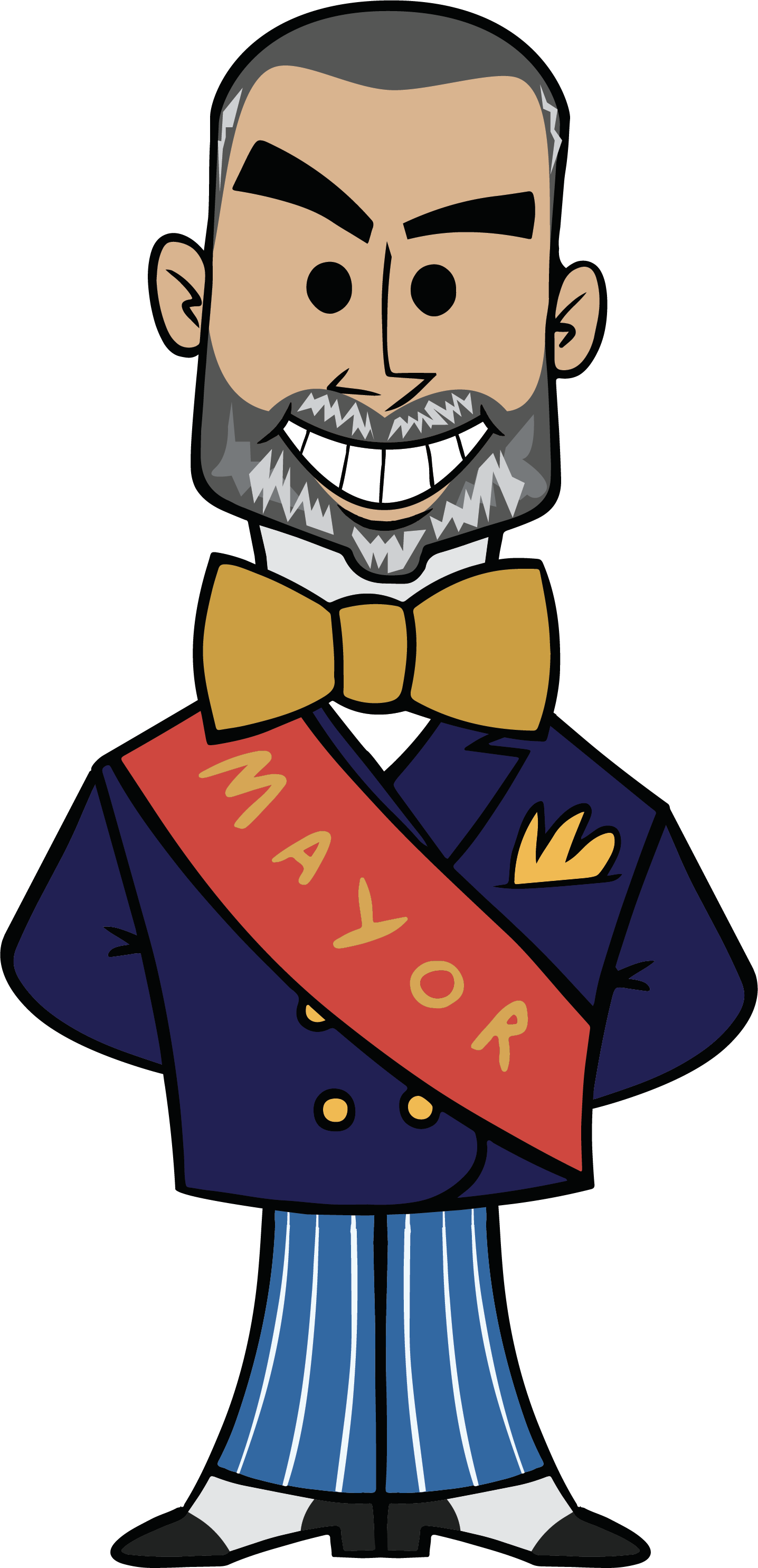
Every reader is different. I talk one way, and my friend Slang talks another, and we are both right. Write to a friend like a friend, not like a form.

The undersigned repaired the bicycle chain independently. I got my chain back on all by myself, and my hands were a mess.

The Mayor portrait

The Mayor · Topic sentence, body, conclusion

A strong paragraph has three jobs. The topic sentence says what the paragraph is about. The body backs it up. The conclusion wraps it. Say it, back it, wrap it.

Facts about my bike, in no real order. A bike chain is easy to fix once you know how. Then the body backs it up. Now you can fix yours too.

The Story Plan

In the Writing Company we do not start writing and hope. We plan the trip first. Here is my plan, and here is how I aim it at a story.

The Mayor's Power Plan

  • Pick it. Choose the idea worth the trip.
  • Plan it. Map your notes before you go.
  • Pour it on. Write, and keep going: more detail, more feeling, more of what only you know.

The Seven Story Questions

Answer all seven and the trip is packed.

  1. Who is the main character?
  2. When does the story take place?
  3. Where does the story take place?
  4. What does the main character do or want to do?
  5. What happens when they try to do it?
  6. How does the story end?
  7. How does the main character feel?

Writers remember them as W-W-W, What = 2, How = 2. Say it out loud once. It sticks.

Watch the Mayor plan it

Watch me run the plan on the story you have been following: the day the bike chain slipped off on the way to a friend's house.

Pick it. The brainstorm found four proud memories: the bike chain, a jump off the diving board, a lost dog I found, a note I wrote. I pick the bike chain. Something goes wrong, I am alone, and I have to fix it myself. Stories live in moments like that.

Plan it.

  • Who? Me, riding by myself to my friend Sam's house.
  • When? A Saturday morning, about a month ago.
  • Where? The bumpy road by the big oak tree, halfway to Sam's.
  • What do I want to do? Get to Sam's house on time, riding my bike alone.
  • What happens when I try? The chain slips off the gear. The pedals spin free and go nowhere. I am stuck, and I am late.
  • How does it end? I set the chain back on the gear, turn the pedal, and ride the rest of the way.
  • How do I feel? Proud, with black grease all over my hands.

Pour it on. Seven answers, and the story already has a beginning, a middle full of trouble, and an ending that earns its feeling. Question five is where your story lives. A story where nothing goes wrong when the character tries is not a story. It is just a ride to a friend's house.

Eight ways to prewrite

Before you plan your own, here are five prewriting tools, run on that same day. Watch how different the same day looks through each one. Open any card.

Brainstorm If it pops into your head, it goes on the page.

Bike chain slipped off on the way to Sam's. Jumped off the high diving board. Found a lost dog and walked it home. Wrote a note that made my mom cry. Beat my brother at checkers.

What it gave us. Options. The brainstorm found four different proud memories, not one. It widens the search before you commit.

Cluster An organized brainstorm. Lines show which ideas belong together.

Center: bike chain slipped off. Branching out: riding alone to Sam's, the pedals spun free, I was going to be late, the chain hung loose, I set it on the back gear, grease on my hands, so proud.

What it gave us. Relationships. The cluster picks one idea and grows it. The diving board and the dog are gone now. We have chosen our story.

5W and H The six questions a reporter asks.

Who? Just me. What? The bike chain slipped off. Where? The bumpy road by the oak tree. When? Saturday morning. Why? The chain was loose. How? I set it on the back gear and turned the pedal.

What it gave us. Coverage. Six slots force out details a quick list skips, like the time of day and how I fixed it.

Five Senses See, hear, smell, taste, touch. The tool for sensory detail.

See: the chain hanging loose and my black hands. Hear: the pedals spinning with a whir and no click. Smell: the oily grease and the warm road. Touch: the cold chain and the gritty grease on my fingers.

What it gave us. Specifics. Not "the bike broke." The chain hangs loose and the pedals whir. That is the detail that puts a reader on the road.

Series of Events A list of what happened, in order. The tool for narrative.

I rode toward Sam's house. The chain slipped off the gear. The pedals spun free and I stopped. I remembered how to fix it. I set the chain on the back gear. I turned the pedal to walk it on. My hands went black, and I rode the rest of the way.

What it gave us. Order. The events line up first to last, and it surfaces moments a quick list skipped. Sequence is the bones of a story.

A story writer usually reaches for the Series of Events and the Five Senses first. But any of the five can crack a story open. Pick the tool that fits the gap you have.