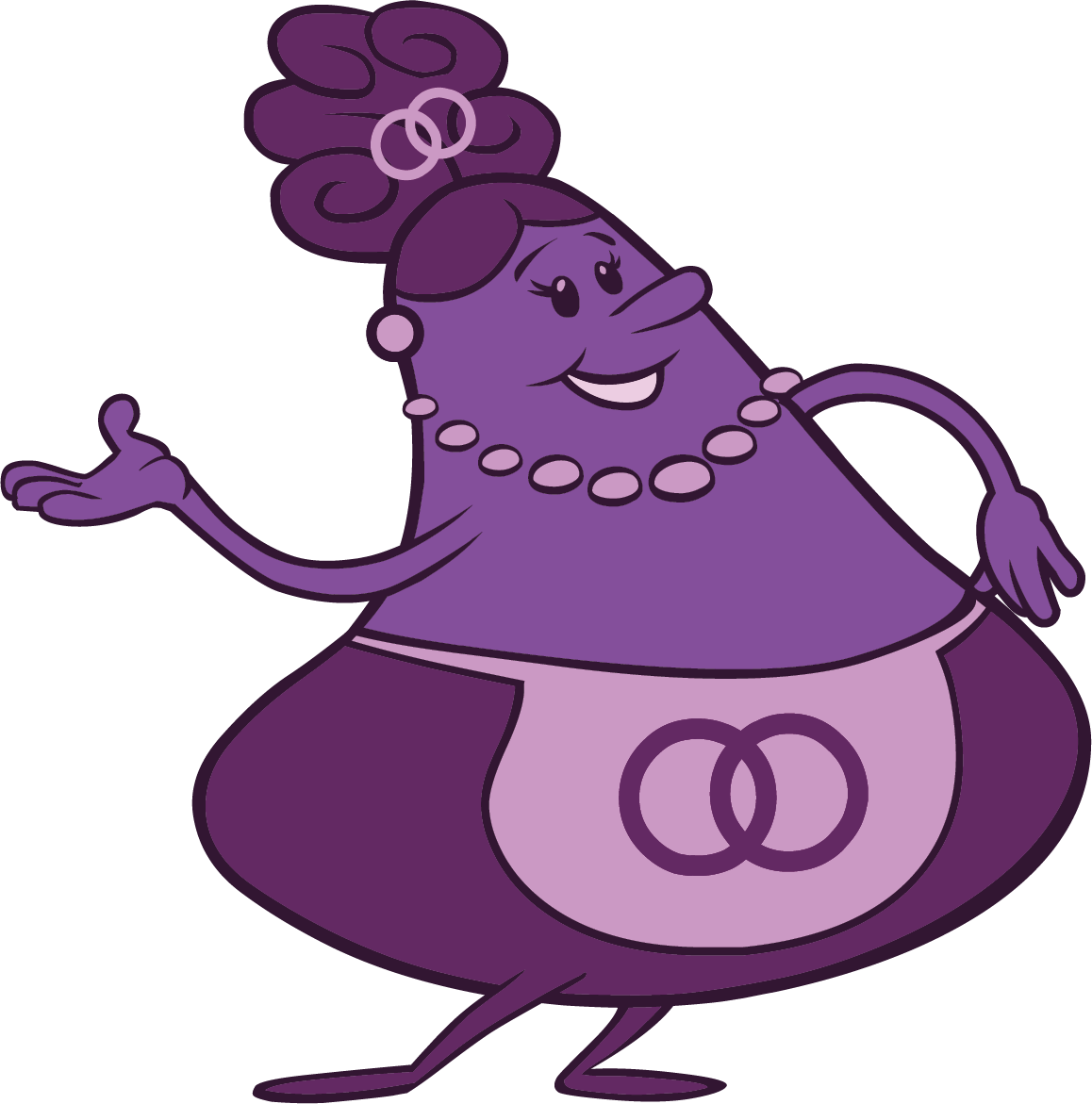
Nelson the Noun
A noun names a person, a place, a thing, or an idea.
Parents: find your child's starting point. It's about ten quick questions, free, and no account needed.
Teachers: see the classroom route. It's free, rostering is included, and it's standards-aligned across four frameworks.
"The Big Man In Town"

No score, no sign-in. Tap to answer, then see the standard it hits. Change the grade above to watch the same idea deepen.
Catch the falling words, sort each to the right character, and watch them build a real sentence.
Grammar Drop →A noun names a person, a place, a thing, or an idea.
Nelson teaches the same idea across every grade, starting simple and going deep. Here is the whole concept: what it does, the jobs and kinds it splits into, the mistakes to watch for, and a worked example for each.
At Grade 3, Nelson adds Concrete Noun, Abstract Noun, Collective Noun, and Compound Noun to what he already teaches.
A common noun names any person, place, or thing and is written in lowercase. A proper noun names a specific person, place, or thing and must be capitalized.
- "Sarah is a girl who lives in Boston."
- "She attends Lincoln Elementary School."
- "The holiday of Thanksgiving falls in the month of November."
- Forgetting to capitalize proper nouns
- Incorrectly capitalizing common nouns
- Inconsistent capitalization of proper nouns
A concrete noun names something you can see, hear, smell, taste, or touch. An abstract noun names an idea, feeling, or quality that you can't see or touch.
- "The apple and guitar are things you can touch."
- "Freedom and courage are qualities you cannot touch."
- "Love and happiness are feelings and ideas, not physical objects."
- Treating abstract nouns as if they can be physically handled
- Confusing concrete nouns with abstract nouns
- Failing to recognize that qualities and emotions are abstract
A collective noun is a word that names a group of people or things. It can describe groups like team, class, family, herd, flock, or pack.
- "The team is winning together."
- "The audience sat quietly throughout the performance."
- "A flock of birds flew overhead."
- Using plural verb with singular collective noun
- Forgetting that collective nouns represent groups
- Confusing the singular and plural meanings of collective nouns
A compound noun is a noun made up of two or more words. Compound nouns can be written as one word (baseball), two words (ice cream), or hyphenated (mother-in-law).
- "I played baseball at the playground."
- "She sat on the coffee table near the bookshelf."
- "My mother-in-law and sister-in-law arrived at the merry-go-round."
- Treating compound nouns as two separate nouns
- Inconsistent spacing or hyphenation of compound nouns
- Capitalizing both words when only the first should be capitalized
A singular noun names one person, place, or thing. A plural noun names more than one. Most nouns add -s, but nouns ending in s, ss, ch, sh, x, z add -es. Nouns ending in consonant + y change to -ies. Some nouns are irregular (man/men, child/children).
- "One cat and one bus become cats and buses."
- "The baby and city become babies and cities."
- "A knife and leaf become knives and leaves."
- Forgetting to add -es to words ending in s, ss, ch, sh, x, or z
- Incorrectly changing vowel + y words to -ies
- Using wrong forms of irregular plurals like child (not childes) and person (not peoples)
A possessive noun shows that it owns something. For most nouns, add an apostrophe and an s (dog → dog's, children → children's); for plural nouns that already end in s, add just the apostrophe (dogs → dogs'). A possessive noun does the same job as a possessive adjective like his or its.
- "The dog's bone was buried in the yard."
- "Maria's backpack hung by the door."
- "The team's bus left at noon."
- Forgetting the apostrophe, so dog's looks like dogs
- Confusing its and it's
- Misplacing the apostrophe when the owner is plural, as in the dogs' bones
Why families and teachers trust Grammaropolis.
"Learning grammar has never been more fun!"
"Like Grammar Rock and the Mr. Men books had an adorable love child."
"My students even asked if they can get extra credit for making up a dance or new lyrics to the songs."
"After using it last year, my kids really got it!"
When a child finishes a cycle, the Mayor signs a certificate naming exactly what they learned. Proof of learning, not a score, and standards-aligned across Common Core, Texas, Florida, and New York.