
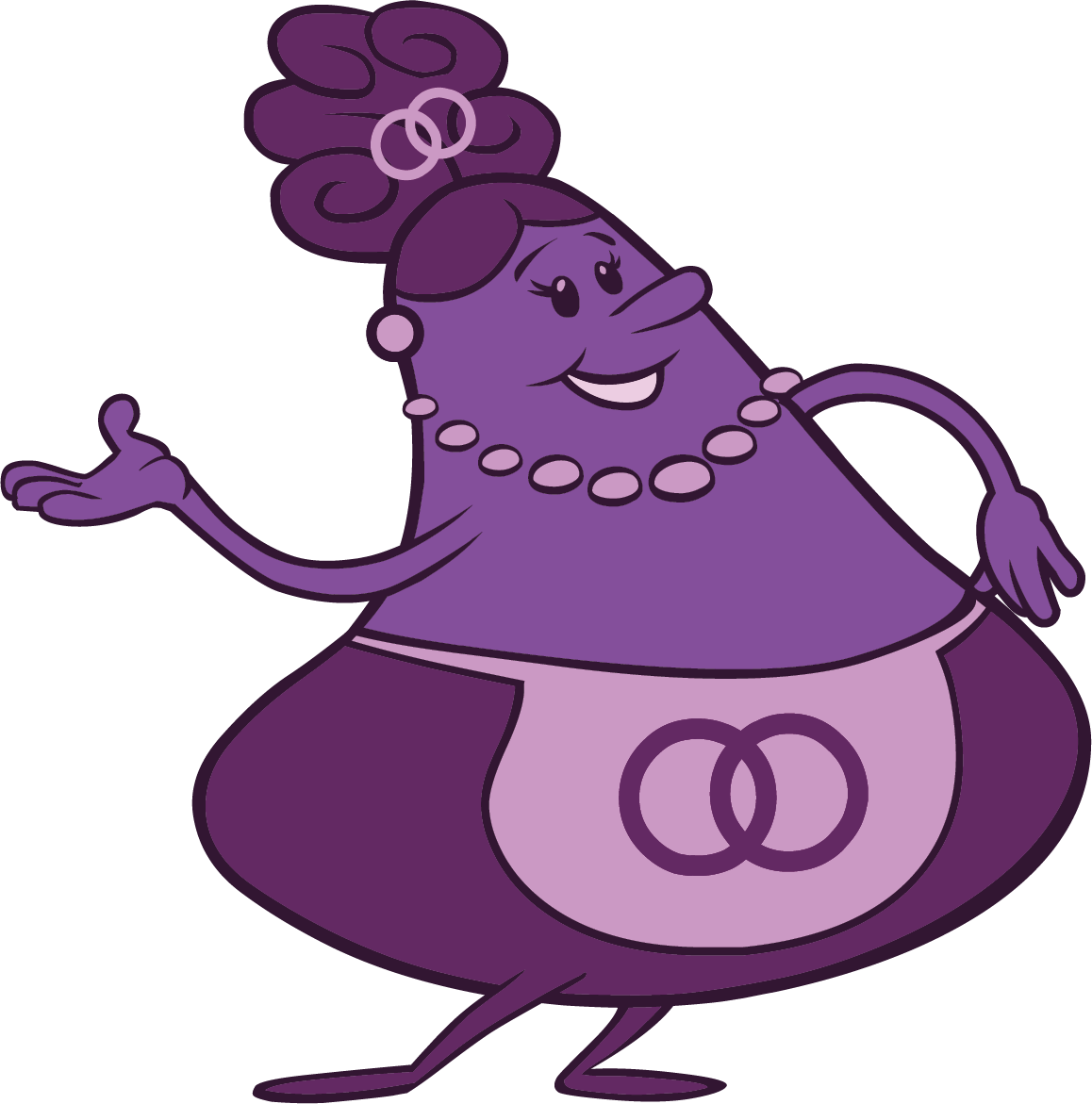
Connie the Conjunction
A conjunction joins words, phrases, or clauses.
Part of a Grammaropolis membership.
Parents: find your child's starting point. It's about ten quick questions, free, and no account needed.
Teachers: see the classroom route. It's free, rostering is included, and it's standards-aligned across four frameworks.
"Let's bring it all together!"
No score, no sign-in. Tap to answer, then see the standard it hits. Change the grade above to watch the same idea deepen.
Catch the falling words, sort each to the right character, and watch them build a real sentence.
Grammar Drop →A conjunction joins words, phrases, or clauses.
Connie teaches the same idea across every grade, starting simple and going deep. Here is the whole concept: what it does, the jobs and kinds it splits into, the mistakes to watch for, and a worked example for each.
At Grade 3, Connie adds Correlative Conjunctions and Subordinating Conjunctions to what he already teaches.
Connie joins what belongs together. She links words: Nelson and Vinny. She links whole clauses: the dog barked, and the cat ran. She joins words, phrases, or clauses without ever losing the thread.
Word, then the character who embodies it, then its part of speech.
A coordinating conjunction joins words, phrases, or independent clauses of equal importance. The seven coordinating conjunctions are FANBOYS: For, And, Nor, But, Or, Yet, So. When joining independent clauses, use a comma before the conjunction.
- "I like cats and dogs. They ran quickly but carefully."
- "She wanted to leave but her parents said no. He worked hard so he earned good grades."
- "We wanted to go outside for it was sunny or we could stay inside."
- Using comma without conjunction (comma splice)
- Forgetting the comma before FANBOYS with independent clauses
- Confusing coordinating with subordinating conjunctions
Correlative conjunctions are pairs that work together: either/or, neither/nor, not only/but also, both/and, whether/or, as/as. They join words or phrases of equal importance. Use parallel structure - words following each conjunction should have the same grammatical form.
- "You can choose either pizza or pasta. Either Sarah or Tom will present."
- "Neither the cat nor the dog wants to come inside."
- "She is not only smart but also kind. Both Elena and Marco attended."
- Breaking parallel structure (both reading and to write is wrong)
- Using only one part of the correlative pair
- Mismatching the pairs (either/and instead of either/or)
A subordinating conjunction joins a dependent clause to an independent clause and shows their relationship. Common types include time (when, while, after, before, until), cause/reason (because, since), condition (if, unless), contrast (although, even though), and place (where).
- "When the bell rings we will go home. I will see you after dinner."
- "We stayed inside because it was raining. If you study hard you will pass."
- "Although they disagree they still respect each other. Wherever you go I'll follow."
- Using coordinating conjunction instead of subordinating
- Forgetting comma when dependent clause comes first
- Confusing the relationships different subordinating conjunctions create
Why families and teachers trust Grammaropolis.
"Learning grammar has never been more fun!"
"Like Grammar Rock and the Mr. Men books had an adorable love child."
"My students even asked if they can get extra credit for making up a dance or new lyrics to the songs."
"After using it last year, my kids really got it!"
When a child finishes a cycle, the Mayor signs a certificate naming exactly what they learned. Proof of learning, not a score, and standards-aligned across Common Core, Texas, Florida, and New York.
Wherever Grammaropolis lives.







Ready to learn conjunctions with Connie?
Learn conjunctions →Nelson's lessons are always free for every grade. The rest is part of a Grammaropolis membership.