
Grammaropolis
The Writing Company · with the Mayor

Write to Persuade

1 Learn Start here
2 Assess Take the quiz
3 Practice Try it out
4 Create Make your own
Certified Earn your badge

Write to Persuade

When you persuade, your reader starts on the other side of the river. They do not believe you yet. That is why you build.

An argument is a bridge you build for a reader who starts on the other side. Here is what holds it up, and what each part does.

  1. A claim that spans the river
    Say what you believe, plainly, in one sentence. The reader should know exactly where you want to take them before you build a thing.
  2. Reasons that are the pillars
    At least three. Ask of each one: will my reader believe this? A reason that only convinces people already on your bank is not a pillar.
  3. A footing of proof under every pillar
    Back each reason with one more sentence: an example, a fact, or what would happen without it. Proof is what carries a doubter's weight.
  4. A far bank with a signpost
    End by returning to what you believe, and tell the reader what to do once they are across. An argument is a conversation with a reader who is allowed to push back.

Spend your tools

The craft moves you already know still do the work, pointed at an argument.

Nelson portrait

Nelson · Specific nouns

A noun names a person, a place, a thing, or an idea, so pick the precise one. "Thing" tells the reader nothing. "Chain" and "gear" put them right there at the bike. Reach for the precise word.

I fixed the thing on my bike. I looped the chain back onto the gear.

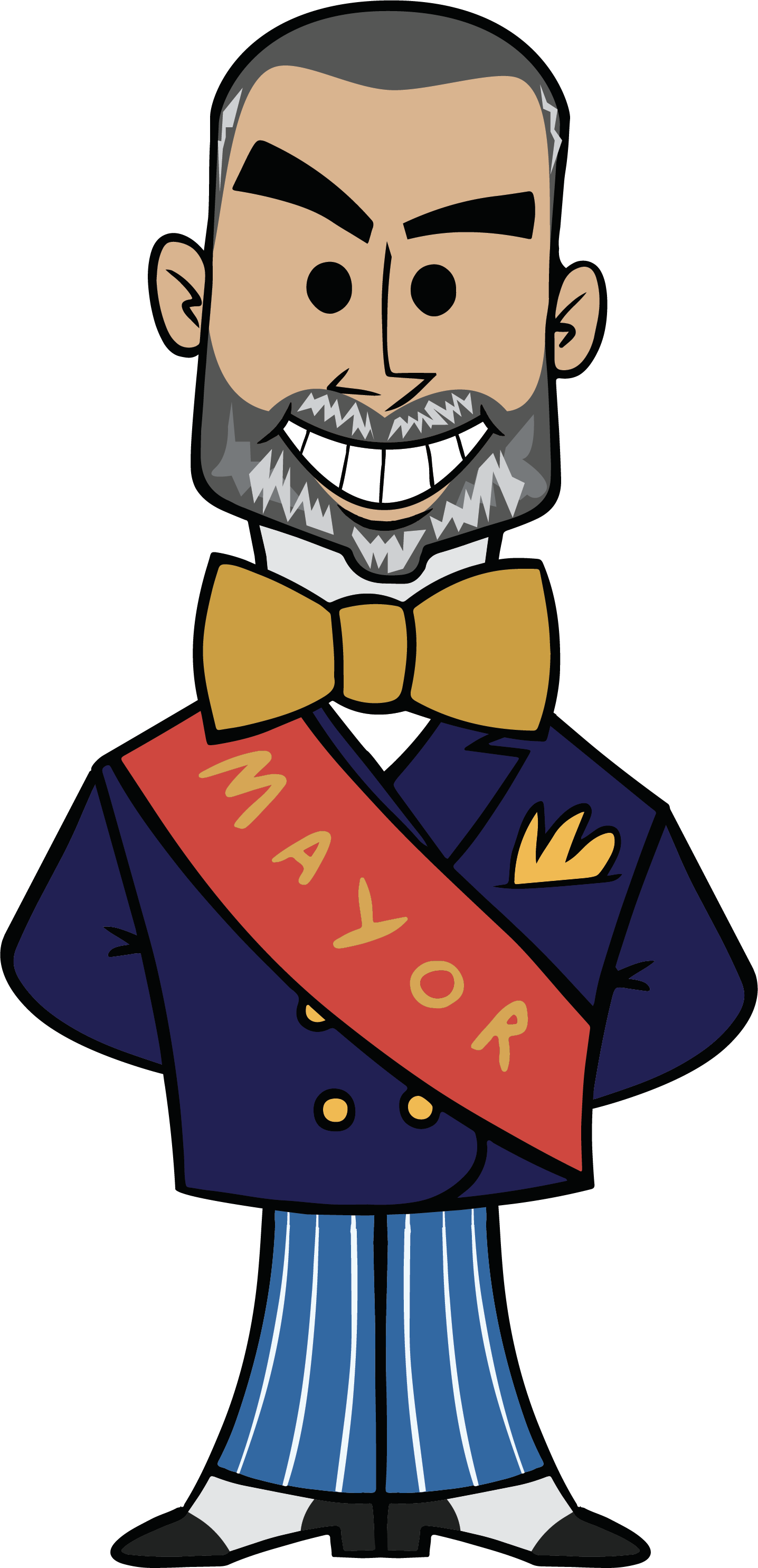
The Mayor portrait

The Mayor · Voice

Every reader is different. I talk one way, and my friend Slang talks another, and we are both right. Write to a friend like a friend, not like a form.

The undersigned repaired the bicycle chain independently. I got my chain back on all by myself, and my hands were a mess.

Connie portrait

Connie · The seven FANBOYS

Connie keeps seven joining words, the FANBOYS: for, and, nor, but, or, yet, so. Put a comma before one, and two sentences become one. "It slipped, but I kept going."

The chain slipped. I did not give up. The chain slipped, but I did not give up.

The Mayor portrait

The Mayor · Topic sentence, body, conclusion

A strong paragraph has three jobs. The topic sentence says what the paragraph is about. The body backs it up. The conclusion wraps it. Say it, back it, wrap it.

Facts about my bike, in no real order. A bike chain is easy to fix once you know how. Then the body backs it up. Now you can fix yours too.

The Persuade Plan

Same three moves as always, one more trip. When you persuade, the Plan it move is the Bridge.

The Mayor's Power Plan

  • Pick it. Choose the belief worth arguing, and know who is standing on the far bank.
  • Plan it. Set your pillars and their footings before you write.
  • Pour it on. Write, and keep asking: would this pillar hold my reader's weight?

The Bridge

A bridge stands because the pillars hold the span and the footings hold the pillars.

  1. Your claim spans the river: say what you believe, plainly.
  2. Your reasons are the pillars: at least three the reader will believe.
  3. Every pillar needs a footing of proof: an example, a fact, or a what-if.
  4. The far bank: return to your claim and tell the reader what to do.
Watch the Mayor plan it

Watch me build a bridge from that same bike day. My claim: every kid should learn to fix their own bike.

Pick it. Every kid should learn to fix their own bike. I believe it, I can back it, and I know exactly one slipped chain that proves it.

Plan it.

  • My claim, spanning the river Every kid should learn to fix their own bike.
  • My pillars (three reasons) 1. It saves you when you are stuck far from home. 2. It saves a grown-up a trip. 3. Fixing your own thing feels good, and you remember how next time.
  • The footings (proof under each) 1. My chain slipped off far from home, and I set it back and rode on. 2. Nobody had to drive out to get me, because I did it myself. 3. My hands were black with grease, and I was so proud I could fix the next one, too.
  • The far bank Learning one bike fix made me prouder than anything all month. Ask someone to show you one bike fix this week. Start with the chain.

Pour it on. When I draft this, each pillar and its footing becomes its own little paragraph, and I keep asking the bridge question as I go: will this pillar hold my reader's weight? An argument is a conversation with a reader who is allowed to say "prove it."