
Grammaropolis
The Writing Company · with the Mayor

Write to Persuade

1 Learn Start here
2 Assess Take the quiz
3 Practice Try it out
4 Create Make your own
Certified Earn your badge

Write to Persuade

When you persuade, your reader starts on the other side of the river. They do not believe you yet, and they have a real objection ready. That is why you build.

An argument is a bridge you build for a reader who starts on the other side. Here is what holds it up, and what each part does.

  1. A claim that spans the river
    Say what you believe, plainly, in one sentence. The reader should know exactly where you want to take them before you build a thing.
  2. Reasons that are the pillars
    At least three. Ask of each one: will my reader believe this? A reason that only convinces people already on your bank is not a pillar.
  3. A footing of proof under every pillar
    Back each reason with one more sentence: an example, a fact, or what would happen without it. Proof is what carries a doubter's weight. Then, once your pillars are footed, name the strongest current pushing against them, the best point someone on the other bank would make, and answer it briefly and fairly before you cross. An objection you answer honestly makes your bridge stronger. An objection you pretend is silly makes it weaker.
  4. A far bank with a signpost
    End by returning to what you believe, and tell the reader what to do once they are across. An argument is a conversation with a reader who is allowed to push back.

Spend your tools

The craft moves you already know still do the work, pointed at an argument.

Nelson portrait

Nelson · Specific nouns

A noun names a person, a place, a thing, or an idea, and ideas can be named precisely too. "Things" says nothing. "The noise, the eye contact, and the boredom" names the abstract change exactly. Pin the idea down.

The ban changed things. The ban changed the noise, the eye contact, and the boredom.

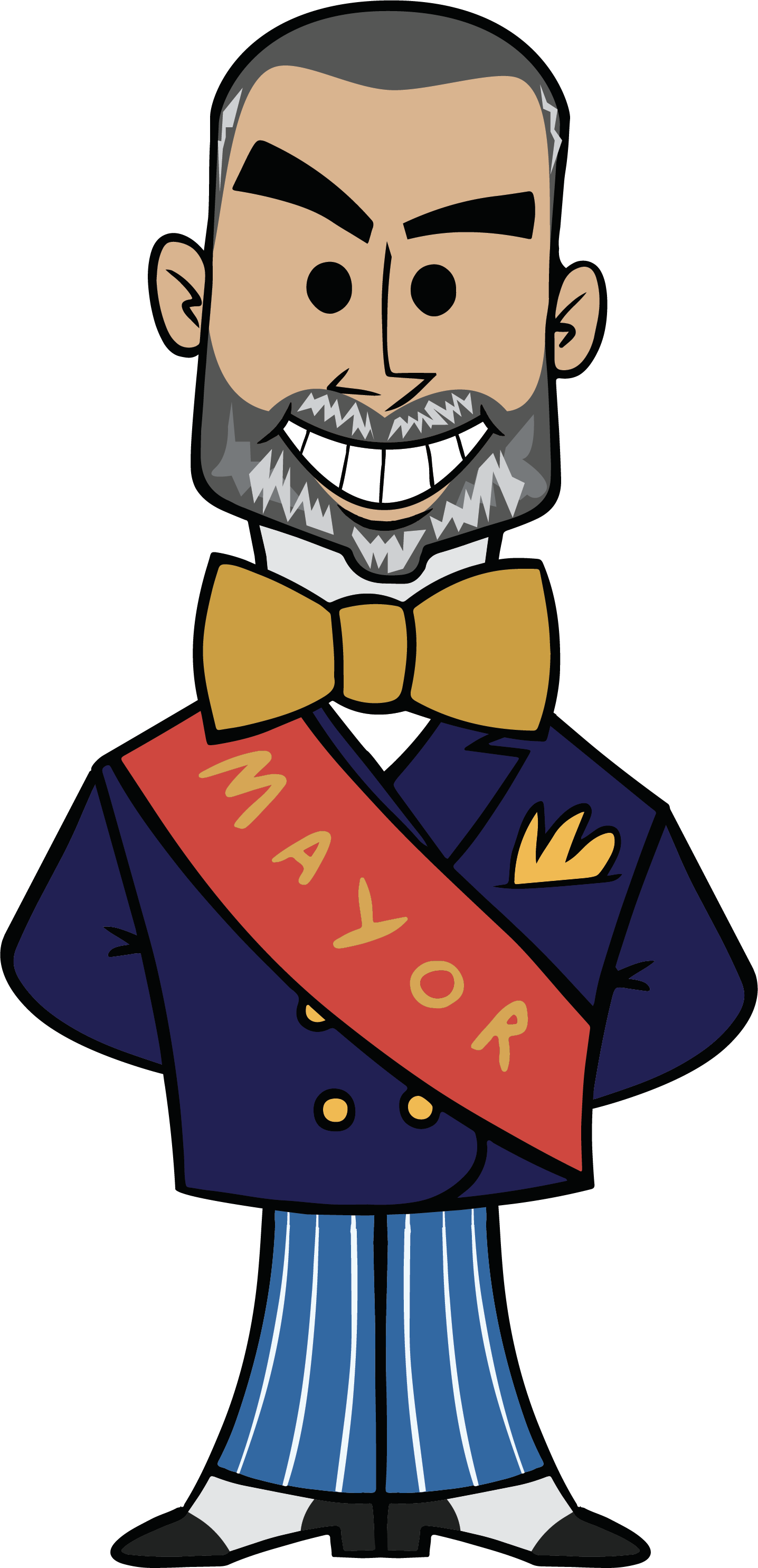
The Mayor portrait

The Mayor · Voice

You already switch how you talk, one way with friends and another in a note to a teacher. That switch is code-switching, and doing it ON PURPOSE is a tool. I write one way, Slang writes another, and each of us picks the register the moment needs.

Yo, the phone thing was straight-up unfair. For a note to a friend, that casual voice is fine. For a letter to the principal: The new policy deserves a second look.

Connie portrait

Connie · Compound and complex sentences

A short sentence lands hard. A longer one that opens with a word like "when," or joins two thoughts with a comma and a conjunction, carries more. Model the comma before the conjunction; that is the rule. Mix the lengths, and your paragraph finds a shape.

The ban started. I hated it. Then I did not. When the ban started, I hated it, but by winter I had stopped noticing my empty pocket.

The Mayor portrait

The Mayor · The three parts of a multi-paragraph piece

A single paragraph has three parts, and so does a whole piece. The opening sets the reader up, each body paragraph carries one point, and the close lands the whole thing. At this grade your writing grows past one paragraph, so the three parts grow with it.

One long paragraph that starts, wanders, and stops. An opening paragraph that sets it up, a body where each paragraph carries one point, and a closing paragraph that lands it.

The Persuade Plan

Same three moves as always, one more trip. When you persuade, the Plan it move is the Bridge.

The Mayor's Power Plan

  • Pick it. Choose the belief worth arguing, and know who is standing on the far bank.
  • Plan it. Set your pillars and their footings before you write.
  • Pour it on. Write, and keep asking: would this pillar hold my reader's weight?

The Bridge

A bridge stands because the pillars hold the span and the footings hold the pillars.

  1. Your claim spans the river: say what you believe, plainly.
  2. Your reasons are the pillars: at least three the reader will believe.
  3. Every pillar needs a footing of proof: an example, a fact, or a what-if.
  4. The far bank: return to your claim and tell the reader what to do.
Watch the Mayor plan it

Watch me build a bridge from the same year you have been following, the year our school banned phones during the school day. My claim: our school's phone ban should stay.

Pick it. Our school's phone ban should stay. I did not believe it in September, which is exactly why I can build it now. I can back it, I know the strongest objection by heart because it used to be mine, and I know one lunchroom that proves the point.

Plan it.

  • My claim, spanning the river Our school's phone ban should stay.
  • My pillars (three reasons) 1. The ban made the lunchroom a place where people actually talk. 2. The ban gave boredom back, and boredom is where daydreaming and real conversation start. 3. The ban made focus in class easier, because the buzz in everyone's pocket was gone.
  • The footings (proof under each) 1. Our lunchroom used to be a hundred kids staring down in silence, and by spring it roared with conversation. 2. One afternoon got so quiet I noticed my own thoughts for the first time in months, and I started actually talking to the person next to me. 3. Teachers stopped competing with a screen under every desk, and I stopped losing my place mid-sentence.
  • The doubter on the far bank, answered Now the strongest point from the other bank, the one I used to make myself: some students say a phone is how they reach a parent in an emergency, and that is a fair worry, not a silly one. Here is the honest answer: in a real emergency the front office phone reaches any parent in under a minute, and the ban only covers class time, not before or after school. The worry is real, and it is already handled.
  • The far bank The lunchroom I have now is louder, warmer, and more awake than the silent one we had before, and I changed my own mind to say so. Tell your student council you want the ban to stay, and say why in your own words.

Pour it on. When I draft this, each pillar and its footing becomes its own little paragraph, and after the last footing I add one more: here is what someone on the other bank would say, and here is why the bridge still holds. I keep asking the bridge question as I go: will this pillar hold my reader's weight, and have I answered the current pushing hardest against it? An argument is a conversation with a reader who is allowed to say "prove it," and also "but what about the emergency?"